
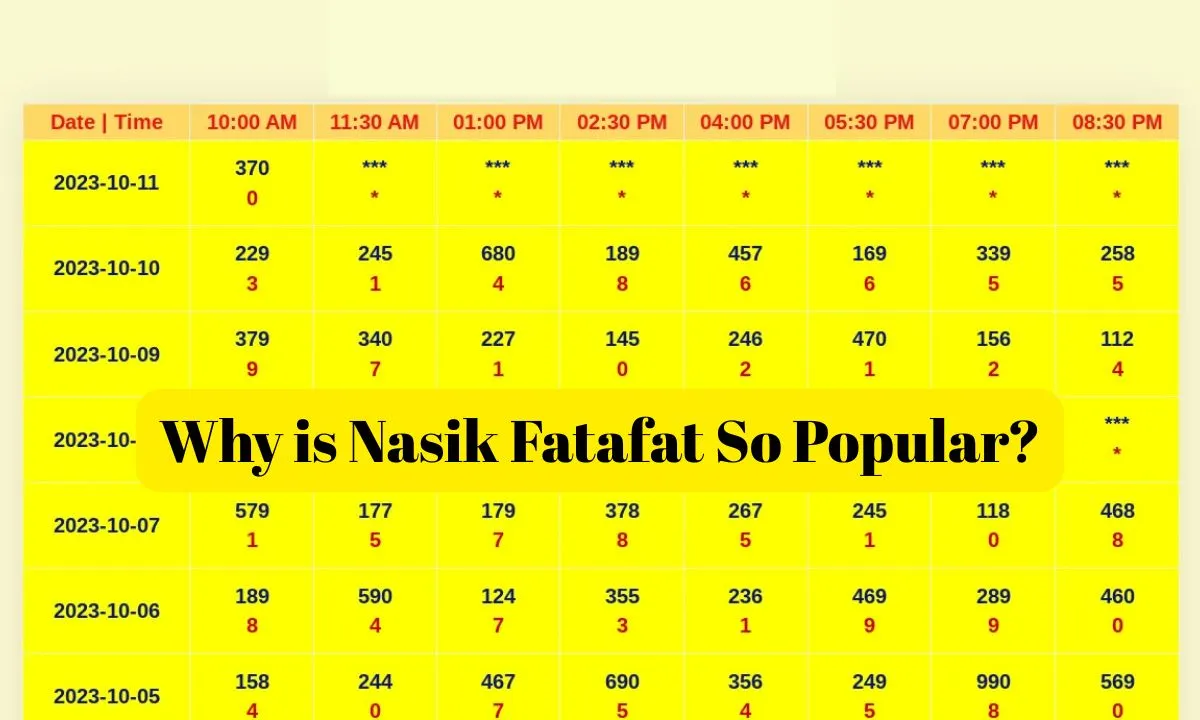
If you’ve heard friends whisper about nasik fatafat or seen result charts shared in WhatsApp groups, you already know the appeal: fast rounds, quick results, and multiple draws each day. But speed alone doesn’t make it simple. Newcomers struggle with the jargon, the way results are written, and—most importantly—the legal fine print. This guest post decodes nasik fatafat fully: daily timings, result formats, key terms, sample charts, risk awareness, and law, so you can read results intelligently and make informed, responsible choices.
What Is Nasik Fatafat, Really?
Nasik fatafat refers to a rapid-cycle number game popular around Nashik, with several rounds per day and results posted in a compact, two-part format. It’s often grouped with matka/fatafat style games seen in other cities—different local communities, similar rhythm: frequent rounds, short waits, and a rolling results chart. Players typically follow the numbers for patterns, share “cut” theories with friends, and refresh result pages throughout the day.
Quick takeaway: Think of nasik fatafat as a local, fast-turnover number draw culture—where reading results and understanding scheduling/format matters more than flashy “tricks.”
Daily Round Structure and Timing (Why the Clock Matters)
One reason nasik fatafat took off is predictable scheduling. Rounds (“bazis”) run throughout the day, letting fans check in when convenient. A common eight-round schedule many readers recognize is:
- 10:00 AM
- 11:30 AM
- 01:00 PM
- 02:30 PM
- 04:00 PM
- 05:30 PM
- 07:00 PM
- 08:30 PM
The exact minutes can vary by site/community, but this hour-and-half cadence from morning to late evening is the backbone. If you track results for strategy, set calendar reminders on these times to avoid missing a bazi. Missing one round often leads to guessing—never a good habit.
Pro tip: Create a simple note where you log each day’s rounds you actually checked. Consistency beats frantic last-minute refreshes.
How Nasik Fatafat Results Are Written (The Format Everyone Quotes)
If you’ve ever seen a line like “460 0” on a results chart and wondered what it means, here’s the plain-English breakdown used widely in fatafat/matka-style listings:
- A three-digit opening (e.g., 460)
- Followed by a single-digit “sum” (e.g., 0)
The single digit is typically the digital root (sum of the three digits, then reduced to a single digit). In the example:
- 4 + 6 + 0 = 10 → keep the last digit (0) as the “sum” shown after the space.
- So “460 0” reads as open: 460 | sum: 0.
On multi-line charts you’ll see a date on the left and the eight daily rounds running left-to-right across columns. Each cell shows a “three-digit + sum” pair for that round. Skimming across a row gives you the day’s full flow; scanning down a column lets you compare the same round across days.
Reader tip: When you analyze, separate round-over-round flow (same day, left-to-right) from day-over-day stability (top-to-bottom within the same time slot). Don’t mix them—each tells a different story.
Common Lingo You’ll Hear (And What It Actually Means)
- Bazi: A single round/time slot in the day.
- Single / Digit: The one-digit sum displayed after the three-digit number.
- Patti / Panel: The three-digit portion.
- Jodi: Pairs or two-digit constructs some communities track (varies by format).
- Open/Close: In some variants you’ll find an “open” and a “close” declaration. Nasik-style fatafat listings often just show one compact value per round.
Knowing these words helps you read community chatter without confusion and spot when someone is casually mixing terms from other formats.
How Fans Track “Patterns” Without Fooling Themselves
Everyone talks about “patterns,” but do it the smart way:
- Segment your analysis by bazi. Compare the 10:00 AM slot across several days, not across different time slots on the same day.
- Control for streaks. Three similar “sums” in a row doesn’t prove a rule; it’s just a short streak.
- Use rolling windows. Track the last 5, 10, and 20 occurrences per bazi. If a quirk disappears at 10 or 20, it was noise.
- Never back-fit. If your “rule” only works after you conveniently rewrite it three times, it’s not a rule—it’s hindsight.
Golden rule: Past numbers don’t influence future draws. Patterns are for organizing your own thinking, not for predicting inevitabilities.
Responsible Play: Bankroll, Limits, and Exit Rules
Even if you only “follow results,” conversations tend to drift toward trying a round “just this once.” If you do participate, these harm-reduction points matter:
- Budget = Disposable Only. Decide a monthly entertainment budget that, if lost, won’t affect rent, food, or bills.
- Set a Session Stop. Before you start, pick a hard loss limit and a modest win target. Hit either? Stop for the day.
- No Chasing. If a bazi goes badly, do not double the next round. Most losses spiral during “chasing.”
- Cool-off Days. Schedule no-play days each week to reset your judgment.
- Talk it out. If you feel pressure or secrecy, step back and speak with a trusted friend or counselor.
Remember: The thrill should never cost your peace of mind, relationships, or financial stability.
The Legal Reality in Maharashtra (Read This Carefully)
It’s crucial to distinguish state-run lotteries (legal, regulated) from matka/fatafat-style betting (widely considered illegal in Maharashtra).
- Matka/fatafat-type gaming has long been treated as illegal under the Bombay Prevention of Gambling Act, 1887 (as adapted for Maharashtra). Enforcement actions and court characterizations consistently place matka in the illegal category.
- Maharashtra State Lottery exists separately as an official, regulated system. That’s not the same as community-run fatafat rounds.
- Policymakers continue discussing how to regulate online gaming and lottery-style platforms, but until rules change and a platform is clearly authorized, treat nasik fatafat as unregulated/illegal participation risk.
Bottom line: Checking results online isn’t the same as legally participating. If you choose to engage with any money-in/money-out platform, verify it is state-authorized and compliant. When in doubt, don’t proceed.
Where People Typically Check Results (And What to Look For)
Fans usually rely on community result pages that publish daily rows with eight bazi columns. When choosing a page to simply view results:
- Prefer sites that timestamp each day clearly.
- Look for a clean eight-slot layout (morning to evening).
- Avoid pages pushing unrelated downloads or pop-ups.
- Cross-check a few days to ensure consistency—large discrepancies are a red flag.
Practical habit: When the day flips, screenshot yesterday’s full row so your record can’t be “edited” later. This keeps your analysis honest.
Reading a Sample Row Like a Pro
Imagine a single day shows entries like:
- 10:00 AM: 460 0
- 11:30 AM: 278 7
- 01:00 PM: 380 1
- 02:30 PM: 567 8
- 04:00 PM: 160 7
- 05:30 PM: 890 7
- 07:00 PM: 489 1
- 08:30 PM: 229 3
What can you responsibly extract?
- Sum Clusters: Notice 0,7,1,8,7,7,1,3—there’s a mid-day cluster around 7. Interesting for record-keeping, not prediction.
- Range of Pattis: You’ve got low (160), high (890), mixed (380/489). Volatility is normal; don’t draw deterministic conclusions.
- Streaks Are Inevitable: Three occurrences of “7” in eight rounds will happen regularly across long timelines.
Myths to Drop Right Now
- “After three sevens, eight is due.” False. Draws don’t “owe” you balance.
- “Morning pattis predict evening pattis.” False. Each bazi is stand-alone.
- “Big losses can be recovered by doubling.” False. That’s the fastest path to serious financial harm.
- “One secret app beats the system.” False. If someone truly had a guaranteed edge, they wouldn’t sell it to you.
Smarter Alternatives (If You Like Numbers and Quick Results)
If you enjoy the number-tracking and fast feedback of nasik fatafat, consider legal, skill-centric alternatives:
- Daily number puzzles / brain-training apps with leaderboards.
- Fantasy sports on regulated platforms, with strict budgets and learning goals.
- Rummy/Chess/Quiz competitions on legally compliant skill-gaming platforms in your state.
- State-run lotteries (where permitted) with transparent draws and posted rules.
Always confirm legality in your state before participating.
A Simple, Safer Routine for Fans Who Still Follow Nasik Fatafat
- Follow the clock: Set reminders for the eight common times.
- Record responsibly: Keep a plain spreadsheet—date, bazi, three-digit, sum.
- Analyze, don’t romanticize: Use 5/10/20 windows and accept randomness.
- Budget guardrails: If you ever cross from “observer” to “participant,” set tiny stakes, hard limits, and frequent off-days.
- Legal check: If a site promises deposits/withdrawals, verify official authorization first. If unclear, walk away.
Conclusion: Be Curious, Not Careless
Nasik fatafat is part of a broader, fast-paced results culture. The numbers are tempting; the cadence is engaging. But understanding the format and schedule doesn’t make outcomes predictable, and legality matters. If you follow the charts, do it for information, maintain strict boundaries, and choose legal, healthy outlets for your competitive energy.
FAQs: Nasik Fatafat (New, Practical Questions)
1) What’s the most reliable way to read a nasik fatafat chart if I’m new?
Start by learning the two-part cell: a three-digit patti followed by a single-digit sum. Then read each row as the day’s flow (morning to evening) and each column as the same bazi over multiple days. That separation will keep your analysis organized.
2) Are the round timings exactly the same everywhere?
Most communities follow eight daily rounds roughly 90 minutes apart from morning to late evening (e.g., 10:00 AM to 08:30 PM). Small variations exist. If you track seriously, lock onto one source’s timetable and stick with it for consistency.
3) Is nasik fatafat legal in Maharashtra?
Community-style matka/fatafat betting is widely treated as illegal in Maharashtra under longstanding gambling law frameworks. This is separate from the official Maharashtra State Lottery, which is regulated. Always verify authorization; when uncertain, don’t participate.
4) I only want to watch results. Is that okay?
Viewing public charts is different from placing bets. Still, be cautious about any platform that solicits deposits/withdrawals. Don’t share personal or banking details unless a platform is clearly state-authorized.
5) How do I avoid chasing losses if I occasionally play?
Pre-define a tiny session budget and a stop-loss (e.g., “I quit for the day if I lose ₹X or win ₹Y”). Stick to it regardless of “hunches.” Schedule no-play days to prevent impulsive spirals.
6) Are there real “patterns” to exploit?
You’ll see streaks and clusters, but they don’t create guaranteed predictions. Use rolling windows (5/10/20) to sanity-check any pattern. If it collapses at larger windows, treat it as noise.
7) What are safer, legal alternatives with quick feedback?
Consider skill-based games on compliant platforms in your state, daily puzzle leaderboards, or state-run lotteries (where allowed). Always read the rules, eligibility, and legal status before participating.
